

Love nature?
Think about people the same way . . .

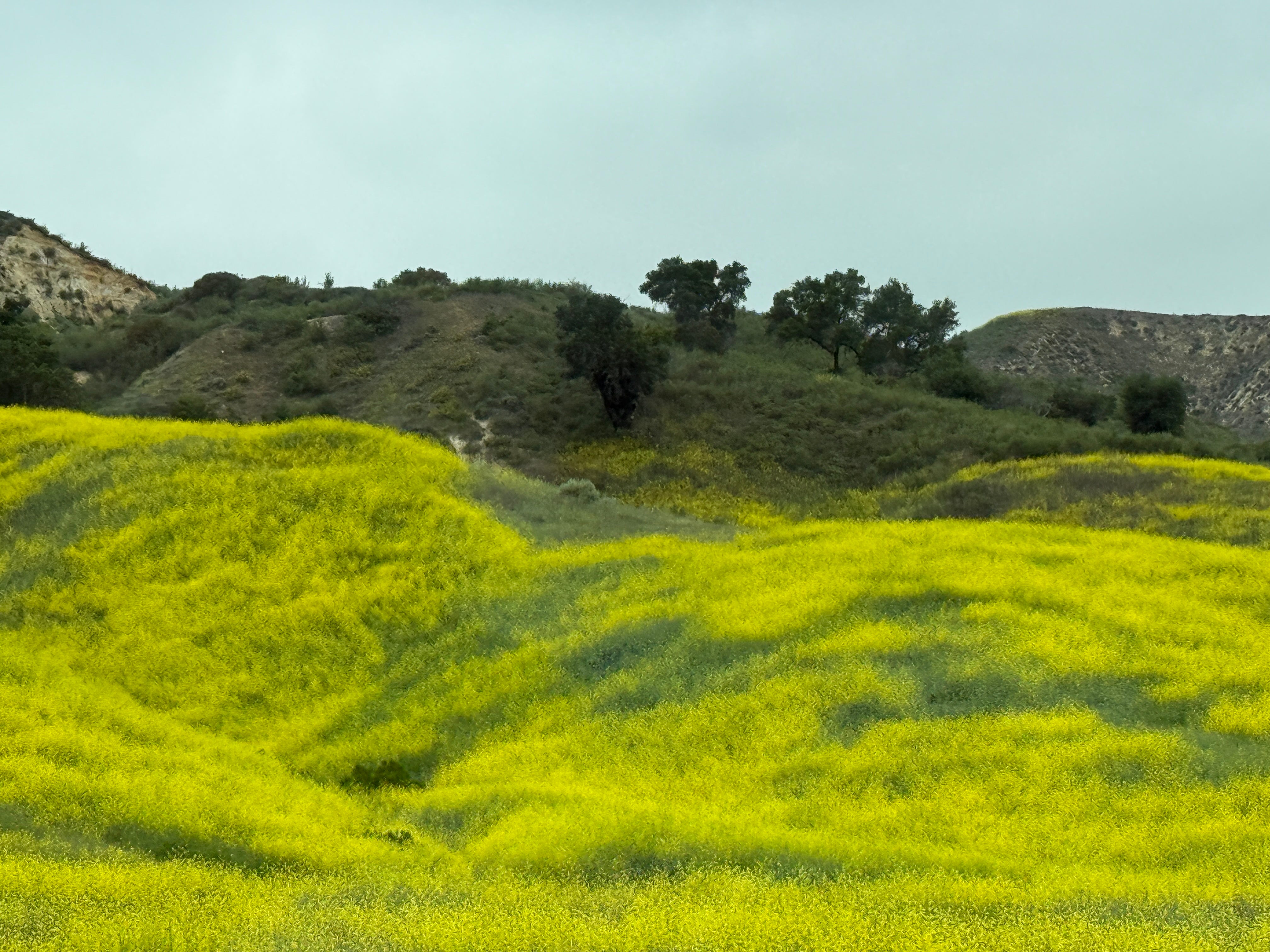
How We Describe Nature
When you recall an exquisite scene in nature that deeply inspired you, what do you see?
Woods awash with vivid fall colors?
A pink grapefruit sun setting over a placid lake?
Cactus-dappled hillsides gleaming in the bright So-Cal light?
What words would you use to describe the scene?
To convey what we see in the California hillsides, we might use words like golden, rolling, deep, majestic, smooth, sturdy.
Yet, it is possible to view them totally differently: brown, scorched, dusty, ugly, lifeless, dead.
Based on the descriptions alone, which scene would you rather visit? Which set of words better communicates the real, fundamental essence of these hillsides?
How We Describe People
Our instinct is to spot beauty in nature, but with people the growing tendency is to describe what’s wrong first: lazy, weird, boring, slow, clumsy, ignorant.
This tendency is so strong (part of what I’ve termed the “inertia of no”) that we need an active strategy to see people differently. The lens of creativity—a uniquely human feature—can help us do this.
As Jane Harvey and I wrote in Creativity for Everybody, each one of us has an individual constellation of creative strengths. The strengths that make up this constellation are the underlying human qualities that support individual growth and expression. These qualities are inherent in us, and they are expressed by each individual in different degrees and combinations.
Your constellation may include strengths like: persistent, curious, courageous, and honest.
Sarah’s might include strengths like: observant, spontaneous, intuitive, and focused.
Certainly we each have the ability to express all of these characteristics to some degree, but perhaps your curiosity shines especially brightly while Sarah’s spontaneity stands out.
Strengths as Stepping Stones
When we know how to identify others by their creative strengths, we help them understand their core identity. Even if weaknesses glare us in the face, it is strengths that give people a leg to stand on. When we consistently define others by their weaknesses, or what they don’t have or are not doing, we contribute to a culture of depression, gloom, and hatred.
Understanding that we each possess inherent strengths, and that these strengths are useful and can be exercised to become even more valuable, makes life worth living. Realizing that we have strengths gives us hope and a vision of possibility for the future. Identifying and affirming our strengths helps us use them as stepping stones to productivity and progress.
Moreover, when we peer through the lens of creative strengths to identify ourselves and others, we see golden, majestic beauty rather than barren, parched hillsides. Next time you’re with colleagues at work, or interacting with the clerk at a grocery store, try pinpointing their creative strengths. Notice these shimmering qualities like you might spot a cardinal perched on a winter hickory limb, or a lush green cholla cactus nestled in the hills along California’s I-5.
A version of this article was first published on Sparkitivity.com
About the art in this post: Gail Peterson is an amateur photographer with a keen eye for color and composition. She takes a version of this photo every year when the Southern California hillsides bloom green and yellow in the spring time. One of Gail’s photographic specialties is sunsets.
I love your creativity book! Truly liberates individuals from false labels put on them by an uninspired thought.